
The Importance of Early Involvement of Subrogation Counsel – Post 3 of 4


Welcome back to our series addressing why early retention and involvement of subrogation counsel is so important.
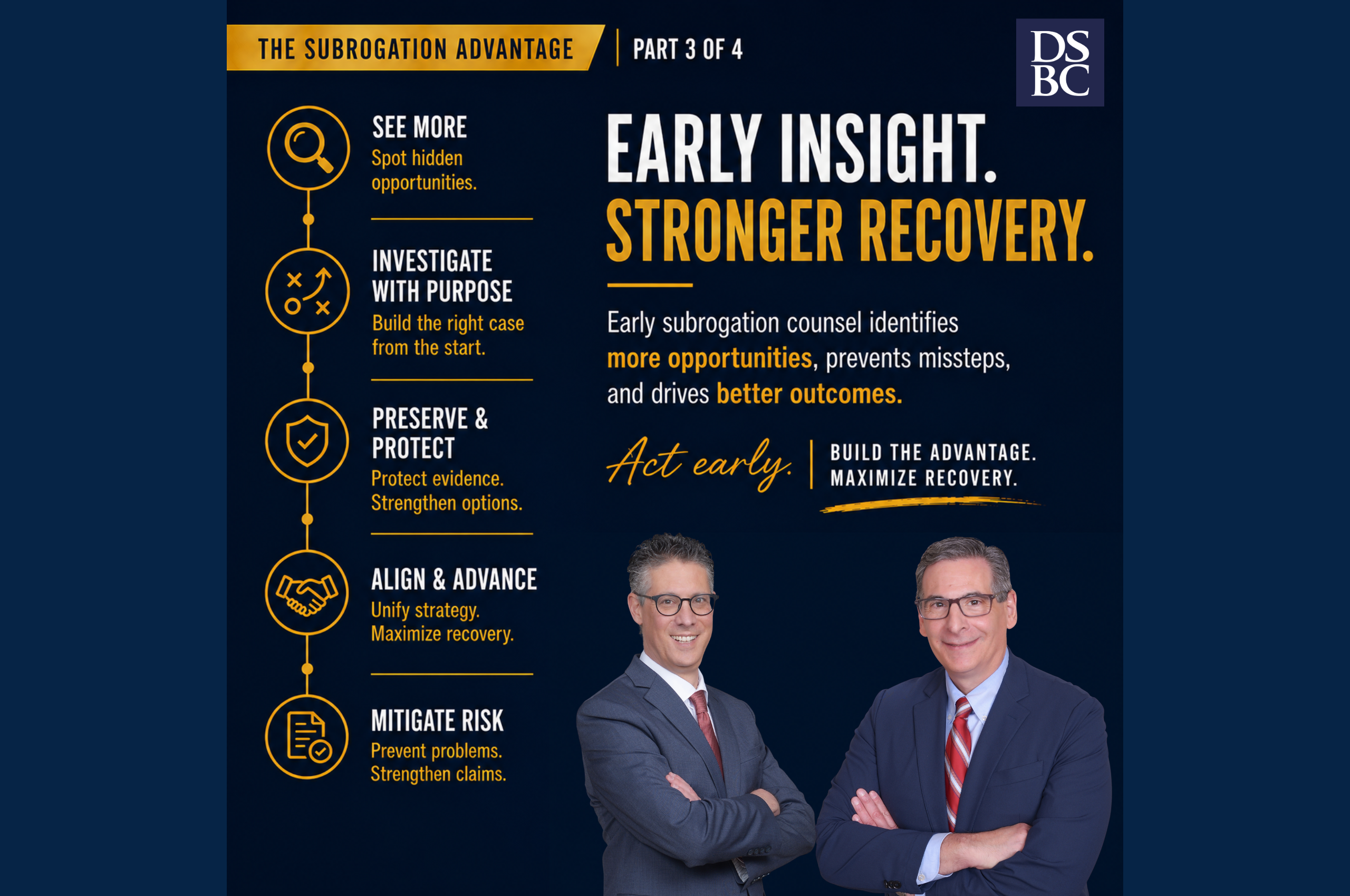
Not all subrogation opportunities are obvious. Many subrogation opportunities are missed because they are identified too late.
Early investigation is only part of the equation. The real value comes from understanding what that investigation should be looking for.
Experienced subrogation counsel can identify potential liability theories at the outset, including, but not limited to, product defects, contractual indemnity provisions, and upstream or third-party negligence. When these avenues are identified early, the claim is investigated with purpose, not reconstructed after the fact.
For example, in a workers’ compensation claim involving a construction site injury, because the insurer is notified about the accident immediately through a First Notice of Loss, early retention of counsel greatly enhances scene and evidence preservation, employer cooperation, selection of appropriate experts and early development of legal theories before personal injury counsel are even aware a loss has occurred. These actions provide the insurer and subrogation counsel with significant leverage over the claim thereby maximizing lien recovery potential.
This type of early legal analysis is central to how we approach claims. We look beyond the obvious to identify every available path to recovery.
Early involvement also creates strategic alignment across the claim. For example, adjusters, experts, and counsel operate with a unified approach; loss characterization and damage allocation are handled with recovery in mind; and communications with insureds and third parties are consistent and deliberate. These decisions matter. Inconsistencies, however minor they seem at the time, can later be leveraged by adverse parties to undermine recovery.
In one property loss, differing early descriptions of the cause of loss in reports and correspondence were later used by the defense to challenge liability. Early coordination by subrogation counsel can prevent these inconsistencies from developing in the first place.
Additionally, early engagement allows subrogation counsel to evaluate contracts for waivers of subrogation or notice provisions, identify additional insured or indemnity obligations, and position the claim for early negotiation where appropriate.
Subrogation success is rarely about a single moment, it’s about consistent, informed decisions made from the beginning.
In our next and final post, we’ll explore the procedural, financial, and practical advantages of early involvement, including cost efficiency, compliance, and better outcomes for insureds.