

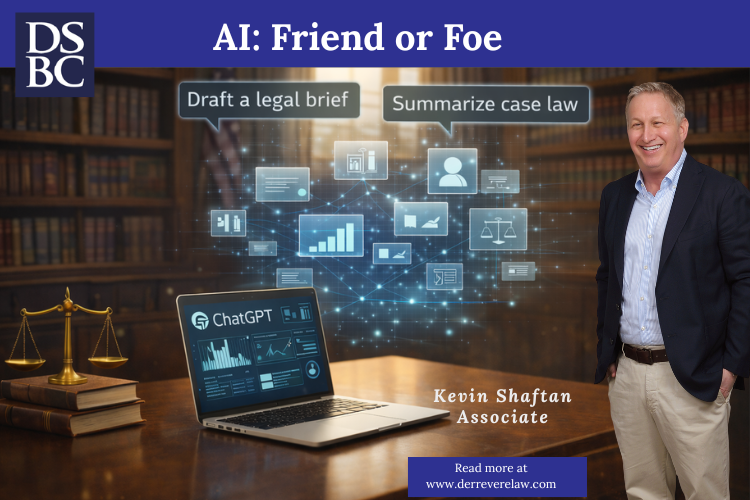
The adage of “if it seems too good to be true then it probably is” certainly holds true for lawyers who are using AI such as ChatGPT to assist them in creating an analytical framework for a particular legal issue by finding case law to support their position in a brief or memorandum.
As we move forward in our profession, embracing the changes and advancements in technology, it is far more common nowadays to read about another lawyer who is admonished by a judge because they cited case law in a brief that simply doesn’t exist.
Now one might ask themselves “why,” I mean didn’t we learn back in law school to shepardize our cases to make sure a case cited is still “good law.” Clearly some lawyers missed that day in school and those are the lawyers who are asking ChatGPT. For example, to simply draft up a memorandum of law to be submitted to court without even bothering to check the cases cited or the arguments raised.
By using ChatGPT to simply draft up a brief without doing any of the basics like shepardizing a case, one is ultimately relying on AI to create a brief most likely filled with “dreamed” up cases and citations which sound great but in realty are magical cases that don’t even exist. Again, if it seems too good to be true it probably is.
Case in point, you are looking for caselaw to support your position (X), could be anything, so you plug in the information on ChatGPT and voila, you get case law with summaries that somehow are right on point and support your position. The problem is that when you check those cases, which every lawyer should do, they don’t exist or the summaries of a case provided are way off base. This is when you need to stop and go back to the drawing board because ChatGPT or any other AI website can never replace the tools every lawyer has in their wheelhouse, that being our analytical skills.
What AI is good for is using it as an extension of Google to help run a search on a particular topic or issue. This way you are using AI as a thought partner and not using AI as a replacement for a lawyer simply doing the work for you.
In this scenario, the user asks AI to consider a problem, issue, or topic that the user self-generates. AI will respond and will spit out a series of points or perspectives on the chosen topic; it may even provide you with some competing interests at play in the chosen topic. This way the user then can use the information generated to further inquire, then refine and focus their own thinking on the topic with some actual non-AI research. This way, AI has helped me think about the problem but has not done the thinking for me.
Use AI as a partner, another tool in the toolbox, but don’t ever use it as a substitute for your own analytical skills.