
Weekly Series Addressing the Importance of Early Involvement of Subrogation Counsel – Part 4 of 4


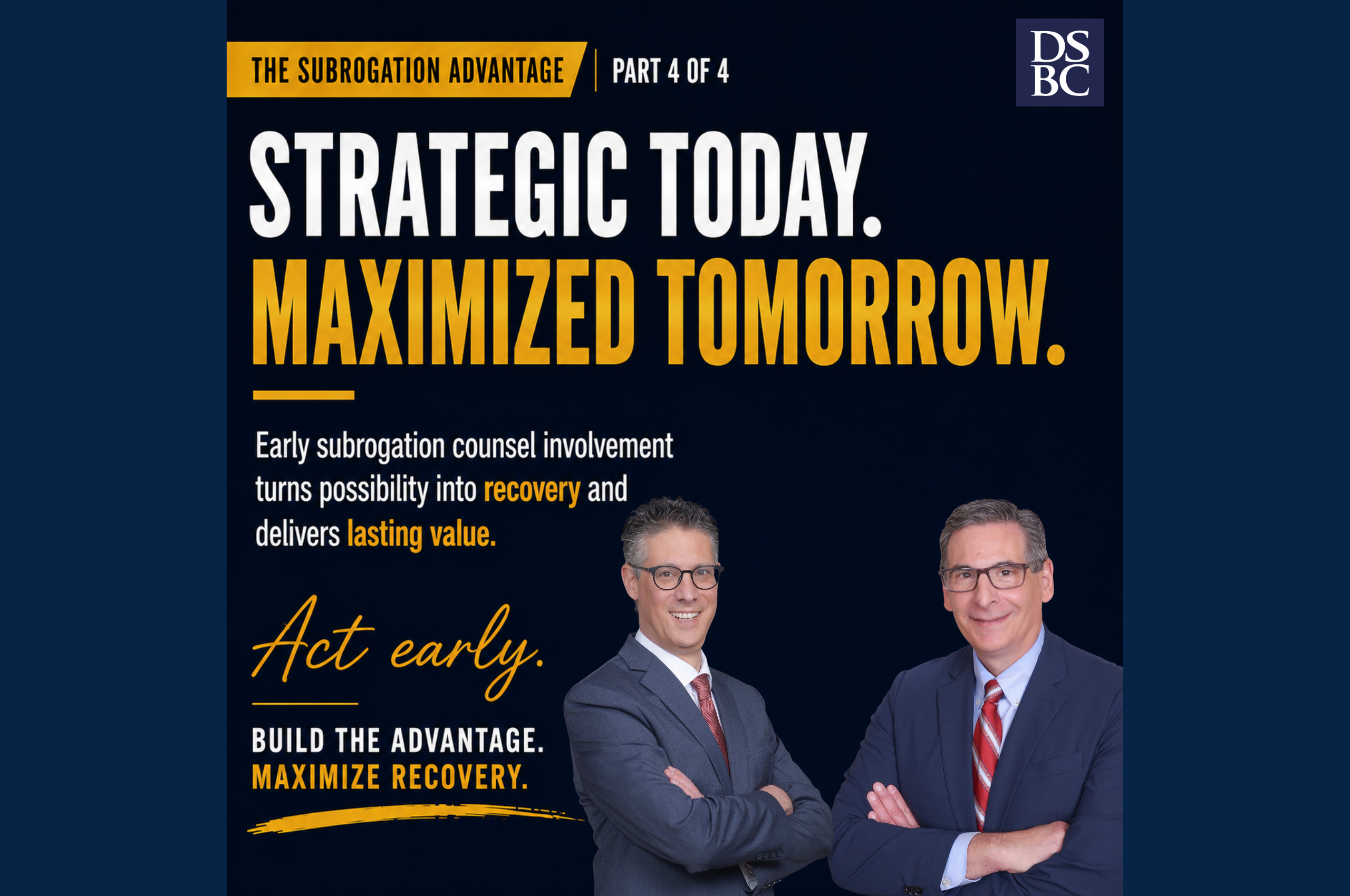
Thanks for staying with us and making it to our final post in this 4-part series on the importance of early involvement of subrogation counsel.
Early involvement of subrogation counsel is often viewed as an added expense; but, in practice, it is usually the opposite. When subrogation is treated as an afterthought, missed deadlines, inefficiencies, and lost opportunities can follow. From a procedural standpoint, early engagement ensures compliance with statutes of limitation, contractual notice requirements, waivers of subrogation and other limiting provisions. Missing any of these can bar or significantly reduce recovery.
We have seen claims where viable recovery was completely barred because notice provisions in a contract were not identified until after the deadline had passed, an issue that could have been avoided with early legal review. Similarly, we have saved claims involving public entities that have statutory notice and suit limitation requirements. In WC subrogation claims, early intervention can mean a race to the courthouse to file a direct lien/whole case action (when permitted) which can save the insurer a statutory personal injury attorney fee. This proactive, detail-oriented approach is how we help clients avoid common (and not so common) pitfalls that can quietly eliminate otherwise valid recovery claims.
From a financial perspective, subrogation counsel often work on a contingency basis. Early direction avoids duplicative or unnecessary expert work. Strong early cases can lead to faster, more favorable resolutions.
In one significant loss, early involvement allowed counsel to streamline expert retention and focus the investigation, ultimately leading to a pre-suit resolution that avoided years of litigation and substantial costs.
Early involvement can also influence adverse party behavior. A prompt, well-supported claim signals seriousness, encourages evidence preservation, and can open the door to early resolution. We have observed that early, well-supported notice letters often result in opposing parties preserving evidence and engaging in meaningful discussions much sooner than in cases where notice is delayed.
There are also meaningful benefits for insureds. For example, subrogation counsel can educate insureds on the recovery process, Joint Prosecution Agreements (JPAs) often increase cooperation and responsiveness, and maximized recoveries can reduce loss ratios and help mitigate premium impacts. In practice, insureds who execute JPAs early tend to be significantly more responsive in providing documents, access, and testimony, thereby helping move the claim efficiently toward recovery. In WC subrogation, entering JPA’s with the claimant’s counsel also fosters cooperation and greatly reduces the probability demands for lien waiver or compromise will be made at settlement. JPA’s also provide cost savings for insurers because statutory attorney’s fees are shared or split between the firms. This client-centered focus, maximizing recovery while streamlining the process, is a key part of how we deliver value throughout the life of a claim.
Ultimately, early subrogation involvement is not just about recovery, it is about better claims stewardship.
In today’s claims environment, where margins are tight and scrutiny is high, delaying subrogation involvement is a costly habit. Early subrogation counsel engagement transforms recovery from an afterthought into a strategic component of claims handling. It preserves rights. Strengthens cases. And maximizes results.
Thank you for joining us. If you have any specific questions, please feel free to reach out to us.