

We all love subrogation because recovery is easy and streamlined. Here’s the life cycle of a typical claim:
The property owner makes a claim. The carrier gets involved and finds the evidence is fully preserved. The carrier engages an expert, who quickly identifies exactly what happened to cause the loss. The tortfeasor is placed on notice, quickly responds, assumes 100% liability, then issues a check for 100% of the claim.
That’s how it works for everyone, right?
… right?
IF ONLY!
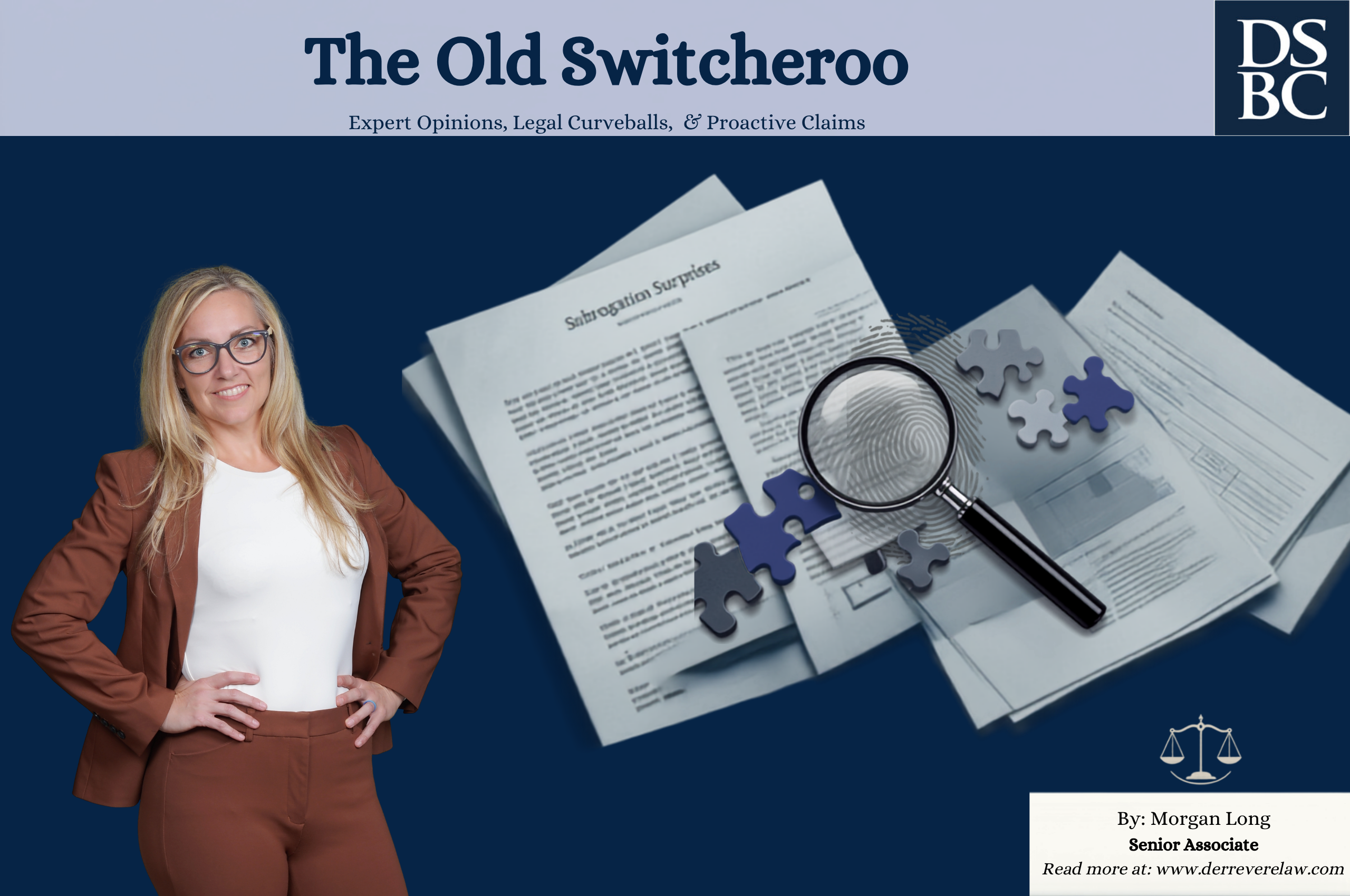
Nothing hurts quite like an expert’s change of opinion mid-suit. Picture it: you’ve discussed the claim up and down with your expert, who is adamant in their opinion that a contractor’s deficient services caused a piece of equipment failure. The Complaint has been served, the contractor filed an Answer and Affirmative Defenses. You’ve discussed those defenses with your expert, who remains confident in their conclusions. Then, months later, discovery reveals some new pieces of information that suddenly shines the light on another target. Based on that new evidence, your expert now has a change of heart and thinks there is merit to those defenses after all. Luckily, there is still time before the statute of limitations and the Court lets you amend your pleadings to add additional defendants.
The problem in that hypothetical isn’t necessarily that an expert had a change of opinion. Isn’t the point of discovery to flesh out the facts? The key is being prepared in the event the expert does change their opinion.
The value of proactivity
It may sound trite to say that the key to successful subrogation is being proactive, rather than reactive. But the reality is that thinking a few steps ahead and remaining nimble so you can pivot if the evidence changes can be the difference between no recovery and a great recovery.
It’s not just about keeping an eye on the statute of limitations; we all know that is important. What about the statute of repose? If all signs point to manufacturing defect, a less experienced subrogator may not even think about the statute of repose for installation.
Let’s say initial testing was done on a plumbing fitting. Your expert concluded the part was defective based on visual examination and microscopic photos. The manufacturer denies, asserting the part was installed incorrectly. You discuss at length with your expert, who even provides a rebuttal. Before filing suit, you decide to get a supplemental engineering opinion from a more specialized expert. That second look reveals there are, in fact, tool marks all over the fitting and your primary target is now the installer after all. If your statute of repose for installation has run, you may be out of
luck. A savvy subrogator thinking a few steps ahead may have preempted the surprise and would have pushed for the second look before the statute of repose.
Early and thorough evaluation of your claim puts you in the best position to preserve the client’s rights, so you have enough time to pivot if an unexpected tortfeasor is revealed. Sticking to a theme is a great strategy for trial, but in the pre-suit fact-finding stages of subrogation pursuit, being flexible and open-minded to alternative theories of liability is going to maximize the chances of successful recovery.
Asking the right questions at the right time
Statutes
When a claim comes across your desk, sometimes you’re under the wire for a statute, and other times there is plenty of time. In some jurisdictions, the statute of repose may have run before the loss was even discovered. In any of those scenarios, you need to know what you’re working with from the jump.
Experts
- What happened?
- How do I prove it?
Knowing what kind of expert to engage for a specific subrogation claim is, of course vital. When and who to engage is just as key. Knowing your expert is just as important as knowing the evidence. An experienced expert who wrote a report may be qualified to the extent of helping elicit pre-suit recovery, but if that same expert has been stricken in trial, you need to know that before filing suit.
- How confident are they in their findings? Is further testing needed to prove what happened? If so, what is the likelihood of finding what we are looking for?
- Are they qualified in this field? Have they testified in trial before and has their credibility been challenged?
- Can they tell if all the parts were original or did replacement parts play a role? Are there alternative theories of liability?
- When was the part manufactured and what is its life expectancy?
Part of the investigation process is finding out what your expert thinks, but also what hypothetical wrenches could cause them to think something different. Tease and test the potential scenarios to make sure all the stones have been uncovered.
Managing a successful subrogation claim involves managing the evidence, the timing, the players, the surprises, and most importantly, client expectations. A prepared subrogator has the agility to move with the curveballs. Assuming they can’t all be smooth sailing quick recoveries like the intro scenario, preparing for surprises is the best way to stay quick on your feet!